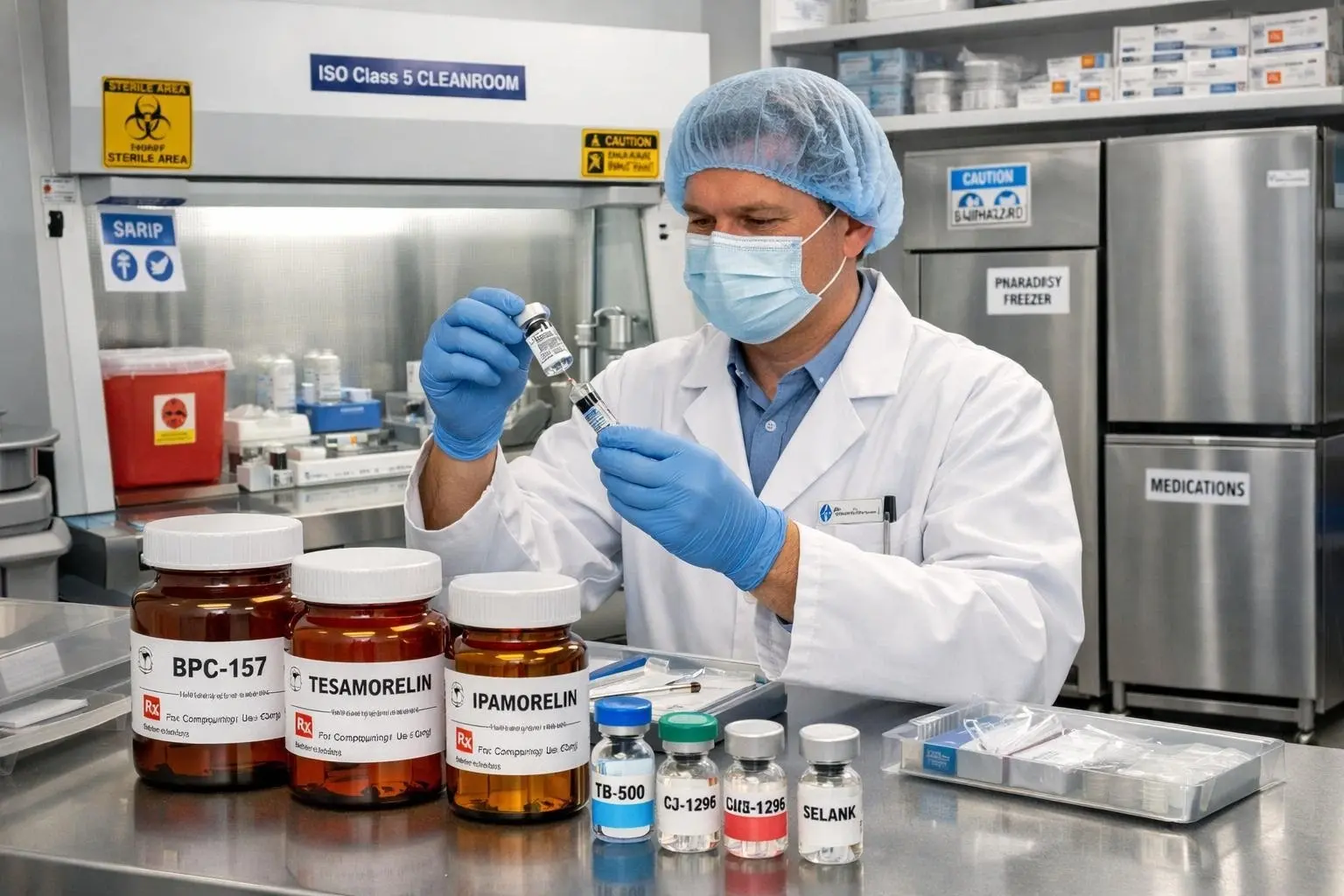
More Than a Peptide: Compounded Peptides vs Online Peptides and Why Medical Oversight Matters
Peptides have become one of the biggest conversations in health and wellness. From weight management and metabolic health to healthy aging, recovery, cellular health, and overall wellness, interest in peptide therapy continues to grow.
But with that popularity comes a new question: Does it matter where your peptide comes from?
The answer is more complicated than simply comparing one vial to another.
When it comes to peptide therapy, what you receive is only part of the equation. How you receive it, who prescribed it, how it was prepared, and whether you have qualified medical support throughout your treatment all matter.
At All U Health, we believe peptide therapy should be approached as part of a personalized healthcare plan, rather than simply as a product purchased online. Our patients have access to medical providers and healthcare professionals who can help determine whether a particular therapy is appropriate, establish an individualized treatment plan, monitor progress, and make adjustments when needed.
What Is a Compounding Pharmacy?
A 503A compounding pharmacy prepares customized medications for individual patients pursuant to a prescription from a licensed medical provider. Compounding pharmacies are primarily regulated by state Boards of Pharmacy and are expected to follow applicable United States Pharmacopeia (USP) standards for compounding.
For patients, one of the important distinctions is that the medication is connected to a prescription and medical provider oversight rather than simply being an online purchase. That distinction becomes especially important when you’re considering injectable therapies.
What Makes a Medical Approach Different?
Peptide therapies are becoming increasingly popular, and compounded peptide therapies may be used as part of individualized treatment plans in areas such as weight management, fat loss, healthy aging, cellular health, metabolic health, sexual wellness, tissue repair and recovery, and overall wellness.
With so many products and online sources available, however, it can be difficult to know exactly what you are purchasing, how it was prepared, or whether it is appropriate for your individual needs.
When peptide therapy is prescribed by a licensed medical provider and dispensed by an appropriate pharmacy, the treatment becomes part of a broader healthcare process.
Individualized Treatment
Your treatment should be based on you, not a generic protocol found online.
A medical provider can consider your individual goals, medical history, current medications, laboratory information, and other relevant factors when determining whether a particular therapy may be appropriate.
Patient-Specific Dosing
Not everyone responds to a therapy in the same way. A medical approach allows your provider to establish an individualized treatment protocol and make changes when appropriate based on your response and ongoing monitoring.
Quality and Preparation
Compounding pharmacies follow established procedures for medication preparation, storage, and handling. Requirements can vary depending on the type of pharmacy, medication, and applicable regulations.
This is an important distinction from purchasing products from unknown or unverified online sources where patients may have limited information about how a product was manufactured, handled, stored, or even shipped.
Medical Oversight
Perhaps one of the biggest differences is what happens after you receive the medication.
Medical oversight gives you access to a professional medical team who can monitor your progress, discuss potential side effects or concerns, answer questions, and determine whether your treatment should be continued or adjusted.
Ongoing Support
Peptide therapy should not be viewed as a one-time transaction.
Your health goals can change. Your response to treatment can change. Your needs can change. Having an ongoing relationship with your medical team allows your treatment plan to evolve with you.
Why Be Cautious With Peptides Purchased Online?
The growing popularity of peptides has created a large online marketplace. Some websites market products for human use, while others sell products labeled “research use only” or otherwise outside a traditional patient-prescription model.
The challenge for consumers is knowing exactly what they are getting.
With products from unknown or unverified sources, patients may have limited information about:
The identity and quality of the ingredients
The concentration and potency of the product
How the product was manufactured and handled
Whether appropriate storage conditions were maintained
Whether the product is intended or authorized for human use
How consistent the product may be from one batch to another
Who to contact if they experience an unexpected reaction or have questions about their treatment
The lower price of an online product can certainly be appealing. But when you’re putting something into your body, price should not be the only consideration.
The bigger question is: What level of medical care and support comes with it?
Popular Peptide Therapies
Peptide therapy encompasses a growing number of compounds being explored for different health and wellness applications. Patients are increasingly asking about peptides related to weight management, metabolic health, recovery, healthy aging, cellular health, and overall wellness.
Some of the peptides generating significant interest include:
Retatrutide
Retatrutide is a next-generation metabolic peptide currently being studied for its potential effects on weight management and metabolic health. It works through multiple hormone pathways involved in appetite regulation, energy balance, and glucose metabolism.
Because research and regulatory status continue to evolve, patients considering emerging therapies should discuss their individual circumstances and available options with a qualified medical provider.
CJC-1295 / Ipamorelin
CJC-1295 and Ipamorelin are commonly discussed in connection with growth hormone signaling, recovery, body composition, healthy aging, and wellness.
Patients interested in these peptides often want to learn more about their potential role in supporting recovery, maintaining lean body composition, sleep, and overall wellness.
GHK-Cu
GHK-Cu is a naturally occurring copper-binding peptide that has attracted attention for its potential role in skin health, collagen production, tissue repair, and healthy aging.
It has been studied for its potential effects on cellular processes involved in skin health and the body’s natural repair mechanisms, making it particularly interesting to individuals focused on skin quality, recovery, and healthy aging.
Wolverine: BPC-157 + TB-500
The term “Wolverine” is commonly used to describe a combination of BPC-157 and TB-500 (also recognized as Thymosin Beta 4). The combination has gained attention among individuals interested in recovery, tissue repair, and physical resilience.
The name “Wolverine” reflects the remarkable resilience and strength associated with the animal, making it a fitting nickname for a peptide combination focused on supporting recovery, repair, and physical resilience.
Your Peptide Journey Should Be About More Than the Peptide
Peptide therapy isn’t simply about ordering a vial and following instructions you found online.
It’s about understanding why you’re taking a particular therapy, whether it’s appropriate for you, how it fits into your overall health plan, and how your response should be monitored over time.
At All U Health, our approach is centered around personalized care and ongoing medical support. Our team can help you understand the peptide therapies available, discuss potential benefits and risks, and determine whether a particular treatment may fit your individual goals and needs.